


(The Center Square) – The Federal Aviation Administration is expected to scale back flights at O’Hare International Airport this summer as two major carriers rapidly expand service, raising concerns about delays, congestion and market imbalance.
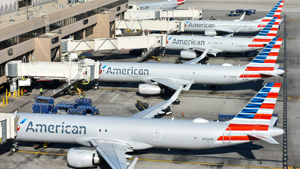
This week, the FAA proposed flight reductions at O’Hare, capping daily operations at 2,608 takeoffs and landings. With the reductions, United stands to lose more flights compared to American Airlines. Ahead of the proposal, United aggressively added flights, adding more than 200 additional flights a day compared to last year (United planned about 750 O’Hare flights vs. 541 last year). By contrast, American sought to add about 45 flights a day, anticipating 525 daily flights during summer peak days compared to just over 480 last year.
Joe Schwieterman is a transportation expert at DePaul University.
“They’ve evolved into this big market share war that is pretty public and pretty emotional,” said Schwieterman.
Federal regulators are considering capping or reducing daily flights after airlines scheduled more than 3,000 peak-day operations this summer – far above what officials consider manageable.
The FAA has discussed limiting operations closer to about 2,600 to 2,800 daily flights to prevent widespread disruptions. Schwieterman said the move is unusual.
“This is pretty unprecedented for the federal government to come in and tell airlines what to do at a particular airport” outside of emergencies like staffing shortages or construction, he said.
The agency’s concern centers on a sharp ramp-up in flights this spring, combined with uncertainty about air traffic control staffing and gate capacity as the Transportation Security Administration remains unfunded and TSA workers aren’t getting paid.
If no FAA action is taken, Schwieterman warned travelers could face a difficult summer.
“The airport will just, in effect, be splitting from the seams in terms of what it can handle,” he said.
American CEO Robert Isom spoke strongly about United’s recent capacity boost at Chicago O’Hare, where American is seeking to restore its pre-pandemic capacity. Isom said he applauds the caps.
“Where we were headed due to the reckless scheduling of our competitor was going to be gridlock, plain and simple,” Isom said, according to Forbes. “It doesn’t help anyone to have Chicago in a situation not only where it can’t operate, but it impacts the entire country.”
Despite the tension, Schwieterman said maintaining two strong hub carriers in Chicago has clear benefits for travelers.
The competition helps keep ticket prices lower and improves scheduling options.
“That often means there’s more discount seats available,” he said. “They compete to have the best schedules, and that brings out the best in both airlines.”
The FAA is expected to require some level of cuts, potentially applied evenly across airlines to avoid favoritism.
“I don’t envy their position,” Schwieterman said. “No matter what they decide, there’s going to be controversy.”
Former Transportation Secretary and longtime Illinois congressman Ray LaHood weighed in on the issue in an op-ed in Crain’s Chicago Business.
“Chicago is the only city in America that enjoys the advantage of a true dual‑hub system, with a multitude of options for consumers from two global airlines, American Airlines and United Airlines,” :aHood wrote. “Together that creates competitive pricing, strong connectivity, and business development opportunities for the whole region … It is a balance that has kept both carriers strong and costs reasonable for consumers. But United’s scheduling surge is threatening that balance. If it continues, O’Hare’s dual‑hub model — and the economic advantages that come with it—are at risk.”