

(The Center Square) – Illinois House Republicans say Governor J.B. Pritzker’s housing proposals will give local control to state politicians, but the governor says decisions will still be made by local government units.
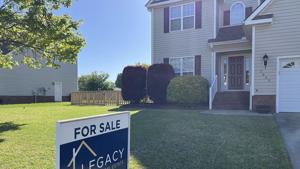
The governor’s Building Up Illinois Developments plan consists of at least five bills aiming to address housing supply and affordability issues.
State Rep. Jennifer Sanalitro, R-Hanover Park, said the plan would take zoning decisions away from local communities and move them to Springfield.
“That means decisions about what gets built in our neighborhoods could be made by politicians who don’t live in or even know our area,” Sanalitro said during a press conference at the Illinois Capitol on Wednesday.
Sanalitro said Addison, Elk Grove Village, Hanover Park and Schaumburg are suburbs in her district that formally opposed the governor’s BUILD plan.
The Hanover Park Republican said the plan would not lower property taxes or reduce construction costs.
Pritzker said in Chicago earlier this week that his proposal is a very light change.
“The reality is that there is still all of the local control about the height restrictions, about how close the setback could be to this, to the street,
all of those other things. The decisions about that get made by local plan
commissions and local city councils,” the governor said.
Pritzker said most of the BUILD plan would not cost taxpayers anything, but he said it did include $250 million to spur development and help people afford housing.
State Rep. Jason Bunting, R-Emington, said Pritzker signed legislation in 2023 that took local control away from counties for the siting of wind and solar projects.
“Increasingly, residents of rural areas are seeing a green energy agenda forced on them while the local leaders have their voices silenced,” Bunting said.
Bunting said House Bill 1201 would return local control to energy projects.
“Local governments deserve a say in the policies which directly impact their communities,” Bunting said.
State Rep. Martin McLaughlin, R-Barrington Hills, said the state has shorted local communities about $1.3 billion in Local Government Distributive Fund revenue from state income taxes.
“I understand we’ve got a rainy day fund which is about $2.5 to $3 billion. I don’t know how much rainier it needs to get in some of these communities like Harvey and others. Let’s restore that money to these communities,” McLaughlin said.