


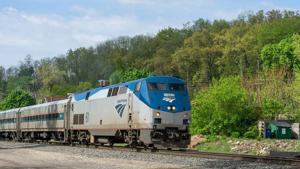
(The Center Square) – As the next owner of the Chicago White Sox is publicly pushing his plans to relocate an Amtrak maintenance facility to build a new riverside stadium for the team, a broad coalition of residents near where the facility would be are flagging the partly federally funded project.
South Side community members packed a union hall recently for a public meeting with Amtrak representatives regarding the project that’s already been granted $659 million by the Federal Railroad Administration.
More than $125 million in funding will also come from future White Sox owner Justin Ishbia through Canal Edge, his firm developing both the new stadium and the new Amtrak yard in Bridgeport.
The new facility would be built on an existing 2-mile-long railyard owned, but decreasingly used, by Union Pacific.The stretch of rail infrastructure in Bridgeport, near the Sox’s current home of Rate Field, also runs adjacent to the Chinatown and Armour Square neighborhoods.
The Coalition for a Better Chinese American Community, alongside other community organizations and elected officials, have led local efforts to push back against the fast-moving project.
Grace Chan McKibben, director of the organization, told The Center Square what the project means to her organization and many community members.
“A lot of the general communications – including [Thursday] night – from Amtrak was saying that ‘it is already a real railyard. What is the difference?’ And then um so the main objection is turning um putting a maintenance facility in the middle of a residential neighborhood,” McKibben said.
She noted that the demographic makeup of the surrounding area is widely made up of Asian and Latin Americans alongside a portion of white residents in the once predominantly white neighborhood.
Hannah Dembosky, founder of Bridgeport Environmentalists and member of the Illinois Environmental Council, shared her organization’s concerns over relocating the facility, especially without fulfilling otherwise required environmental reviews.
“[Amtrak] got the categorical exclusion from an environmental impact statement and that it’s going to be like 24/7.So, that was really when our community got the full sort of picture that this is going to be a major deal and incredibly polluting,” Dembosky said.”It’s definitely been incredibly opaque and behind the scenes.”
The environmental proponent made note of the fast-tracked timeline of the relocation project, with an initial announcement around late-April, followed by the mid-August grant announcement that came alongside detailed plans to begin breaking ground in the fall.
Dembosky also called into question Ishbia’s involvement in the project both at the Thursday meeting and in conversation with The Center Square.
“He is eyeing Amtrak’s current land for his mega development for the new stadium. So, it feels very much like this is so that a billion there can kind of screw over our community for his own private benefit,” Dembosky said.
She said Ishbia also has a conflict of interest as members of his family have made major contributions to President Donald Trump’s Make America Great Again PAC, now getting a fast-tracked “go ahead” for the project that will make available land for his new stadium.
Steven Segerlin, Amtrak’s head of commercial development, said at the meeting that the project has been in the works since 2023, noting the site would be beneficial for Amtrak without having a major impact.
“In 2025, the Federal Environmental Review for acquiring the yard was finished. And later that year, Canal Edge joined Amtrak as a delivery partner,” Segerlin said. “It’s been a railyard for over a hundred years. So the land use doesn’t change. Neither does the footprint of the railyard.”
Dembosky said the relocation would have major environmental impacts, as the currently dormant railyard would instead regularly be moving diesel-engine locomotives through the mostly residential area – with as many 6,700 residents living within 500 feet of the yard, which she noted would also contribute noise and light in addition to other environmental pollutants.