

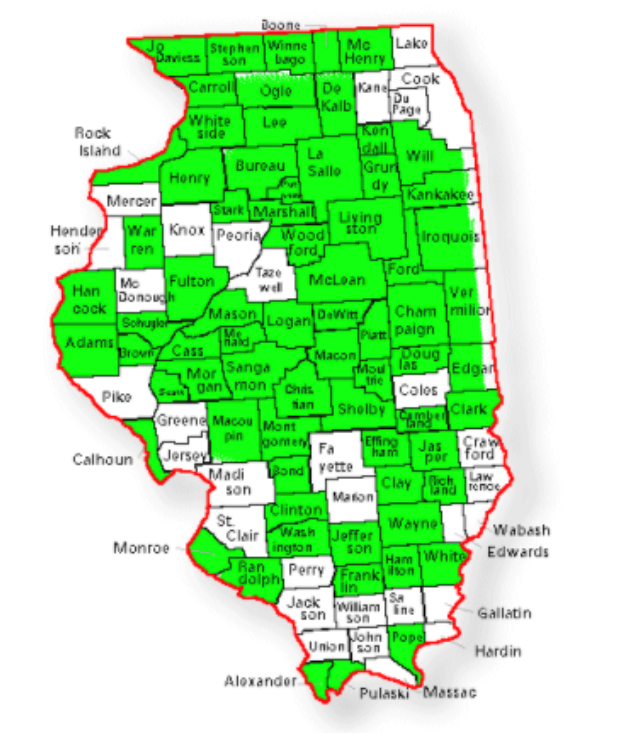
Over two-thirds of Illinois counties are voting to oppose a proposed state law. Over 70 counties passed resolutions to preserve county zoning rights.
“A majority of these counties, that have adopted these resolutions, already have turbines,” said Livingston County precinct committee member Rebekah Fehr. “Illinois is number five in the U.S. for wind development.”
McLean County has adopted zoning ordinances, which Fehr said is more restrictive than what the governor wants them to do.
“As it’s drafted it would give wind and solar eminent domain. It also requires that zoning laws already in place be replaced and comply with the new mandates from Springfield,” said Fehr. “Local zoning should be left to the people who live within the communities and not dictated by someone else.”
Fehr said a couple years ago the state took away township zoning and several people backing the current language in SB1602 testified and said it was counties decisions.
“Now these people are going after county rights,” said Fehr. “You can see the progression of taking away township rights, county rights…What’s going to be next? If it is wind and solar this time, what industry will it be next time? What industry is it going to be that is going to want to come in and do whatever they want in our county?”
Fehr said the wording in the bill would take away locally controlled zoning regulations relating to wind and solar.
“Illinois is a diverse State. From the urban areas of Chicago to the Agriculture sections of Central Illinois and everything in between,” said Fehr. “Historically, the decision on enacting zoning laws was left to the local governments as they best understand the issues and concerns of their respective constituents. However, that will all change if the Illinois Legislature, as part of a larger energy package, passes a proposal to change the ways county governments pass zoning laws. It will severely restrict county governments from enacting zoning legislation and effectively take control away from landowners.”
Fehr said the proposed legislation is nothing more than a wish list for the wind energy lobbyists.
“Wind developers can still develop. It just costs the wind developers more money to buy out more people, which they obviously don’t want to do,” said Fehr. “It’s not that they can’t erect turbines, it’s just that they don’t want to pay more money to those who have to live around these.”
Fehr said the claims of not being able to develop come from restrictive ordinances at the county-level, but those are waivable.
“If there is a set back of say 1640 ft. from somebody’s property line, that landowner can wave that,” said Fehr.
The wording of SB1602 is in the Governor’s energy bill currently under consideration in the Spring Session of the Illinois General Assembly.
If the language appears in the bill, Preserving Livingston County Rights plans to email and make witness slips to address legislators to change it. This organization did higher a couple lobbyists who have been working for them for a few months.
“I can’t remember an issue that this many counties got together to oppose certain language,” said Fehr.