


According to Fox Business, federal officials are urging the chief executives of AT&T and Verizon Communications to delay plans to rollout their new 5G wireless services next week due to safety concerns with aircraft operations.
A Central Illinois Avionics Department manager tells Cities he doesn’t think AT&T and Verizon working against the FAA isn’t going to have major implications on aviation.
“I tend to think that this is made into a bigger issue than it is. I know when I lived in Dallas and flew, a lot of the area around the VFW airport had notification for just normal cell phone signals that would bend the radio altimeter signal. The 5G may do it more, but I know if there’s a lot of intense cellular activity it can mess with the instrument landing systems.
He said he thinks the FAA is just making people aware of this, but eventually this will just be something we live with post-litigation. He compared it to putting your cellphone in “airplane mode” and how those cellular signals can mess with the instrument system.
“They might say you, ‘Hey you can’t land here because of the signal in the area.’ But in reality, if they were to continue the approach they’d be probably be okay,” said the Avionics Department manager.
Although the FAA has determined the operations immediately at risk are those requiring a radio altimeter to land in low visibility conditions, a wide range of other automated safety systems rely on radio altimeter data.
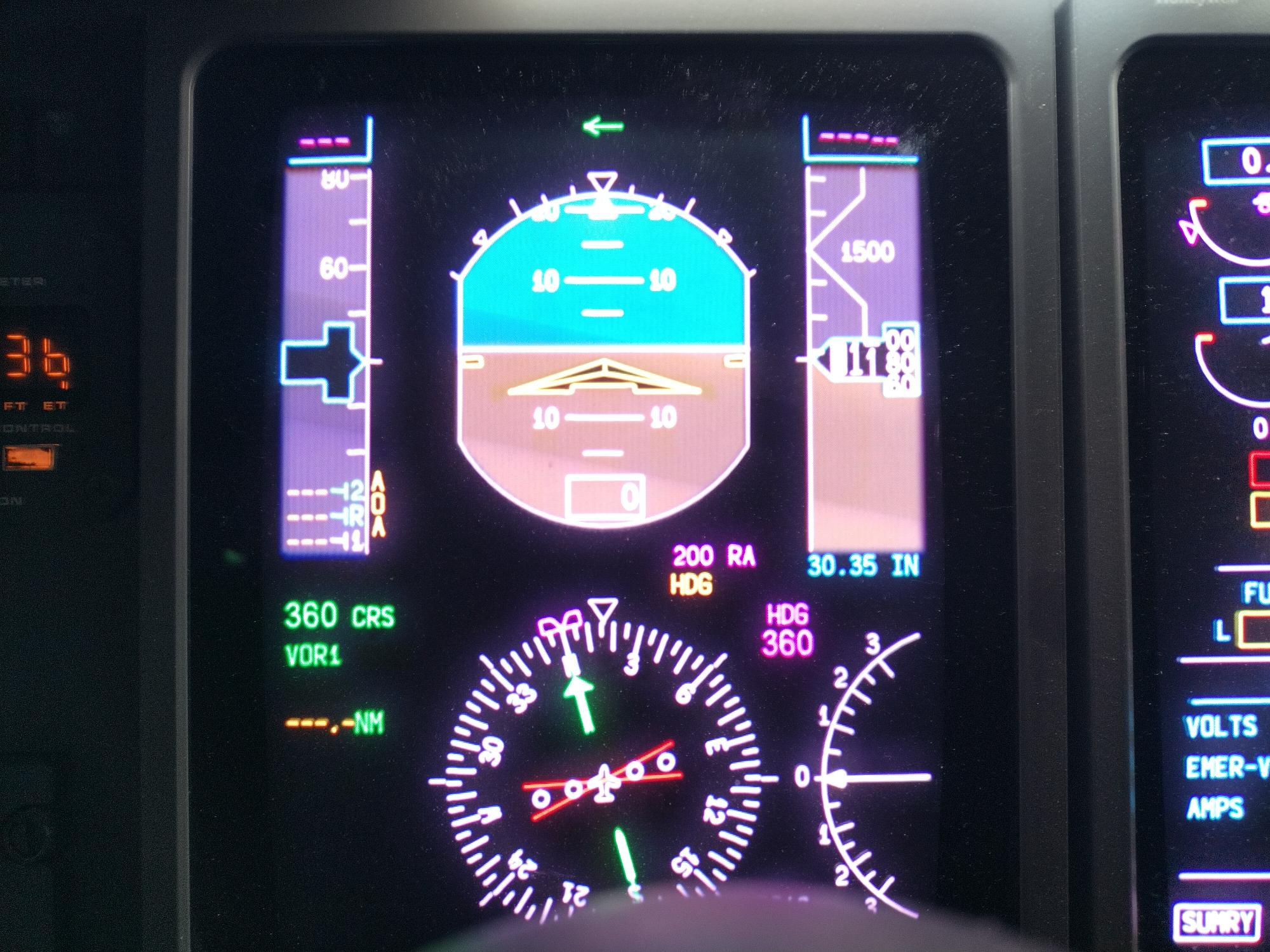
An Avionics Department manager said the radio altimeter is what they use for landing and take-off.
“They shoot a radio signal down, and then they measure the response time like sonar. It then tells them exactly to the foot how far the airplane is off the ground,” said the manager. “If you were to have a potentially low-visibility situation…they’re using that [signal] for landing and if there is a 5G signal that could deflect that.”
Harmful interference to the radio altimeter could cause these systems to operate in an unexpected way. The FAA continues to work with inter-agency and industry stakeholders to collect data on potential effects to these systems to determine whether additional mitigations are necessary. The FAA determined, however, that mandatory action is not immediately required for these systems.
The avionics manager said this impacts pilots and operations, especially initially, pilots are needing to check every airport they go into to see if there is a published notification of 5G in the area.
“If they have a very low visibility where they are doing an approach to a minimum altitude of 100 feet, but if the 5G in the area is proven to disrupt the radio altimeter signal enough…where they notify all the pilots and say, ‘Hey you can only approach to 1,00 feet’ they might not be able to go into that airport,” said the local avionics manager.
He said from there the pilot would have to change paths to an airport without that 5G interference. He said because CIRA (Central Illinois Regional Airport) in Bloomington doesn’t have a huge residential area around it is unlikely 5G will effect that airport.
“Currently, the 5G issue is being reviewed and resolved on the federal level and does not fall within the Bloomington Normal Airport Authority’s purview,” said CIRA’s Fran Strebing.