


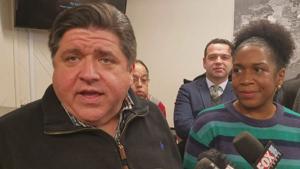
(The Center Square) – Following Tuesday’s primary, Democrat Lt. Gov. Julianna Stratton and Republican Don Tracy will face off in Illinois’ U.S. Senate race left vacant with the retirement of longtime Democratic Sen. Dick Durbin.
But among the candidates who fell short, a common frustration echoed across party lines: the outsized role of money in politics and what several described as an entrenched political establishment limiting fair competition.
Republican candidate Pamela Denise Long said her campaign connected with voters statewide but faced structural challenges within the party.
“What I saw is that the establishment doesn’t know when to leave the room,” Long said, arguing that longstanding party leadership has failed to build a new generation of candidates. She also criticized self-funded campaigns, adding that large personal donations can skew visibility and access.
“I think there should be a cap on the amount of money that goes into a campaign…people need to be connecting with voters, not buying airtime,” Long said.
Fellow Republican Cary Capparelli similarly pointed to barriers tied to funding and media access, particularly in debate participation.
“Even the Republican debate…was based on how much money you raised,” Capparelli said. “They excluded candidates…from being in their debate on TV. We lost the opportunity to speak to voters.”
Capparelli added that lack of enthusiasm among conservative voters, driven in part by dissatisfaction with establishment-backed candidates, has been a persistent issue in Illinois elections.
The Associated Press called the GOP primary for Tracy at 8:38 p.m. on Tuesday, with early results showing him leading 40.0% in the race.
“I am honored to accept the Republican nomination for U.S. Senate,” Tracy told The Center Square shortly after being declared the winner. “Illinois families face sky-high costs of living, and I’m ready to take that fight to Washington with common-sense solutions to make life more affordable. I’ll work for everyday Illinoisans, not special interests.”
Tracy criticized Stratton’s record, saying she has raised taxes repeatedly, spent billions on non-citizens, and proposed government-run health care that could cost more than $30 trillion.
“We’ll work hard every day to win this Senate seat for working families,” he added.
On the Democratic side, candidate Kevin Ryan also centered his campaign on reducing the influence of money, emphasizing grassroots outreach over traditional fundraising.
“Money in politics, I believe, is the root of all of our issues,” Ryan said, noting he was significantly outspent by top contenders. “We’re trying to redefine political viability away from the money model.”
With 82% of votes counted, the AP called the Democratic primary for Juliana Stratton, after Raja Krishnamoorthi conceded, with Stratton holding 39.6% to Krishnamoorthi’s 33.4%.
Ryan said he focused heavily on rural outreach, visiting all 102 counties in Illinois. Despite the loss, he framed his campaign as part of a broader movement.
“Win or lose, this…is bigger than any one election,” he said. “There’s significant reform needed to make our democracy work—like ranked-choice voting, open primaries, campaign spending limits, and public financing.
He also argued that financial barriers shape who gains visibility in competitive races. “If you’re not a current officeholder and you don’t have millions of dollars, then you don’t get a seat at the table,” Ryan said.
He also argued that financial barriers shape who gains visibility in competitive races.
“If you’re not a current officeholder and you don’t have millions of dollars, then you don’t get a seat at the table,” Ryan said.